

How To Clean Your Hands Without Soap
Soap: How Much Cleaner Does Information technology Actually Make Your Hands?
Many of us wash our easily with lather and water, but how much work is the lather really doing?
Many of us wash our easily with soap and water, merely how much is the lather really worth?
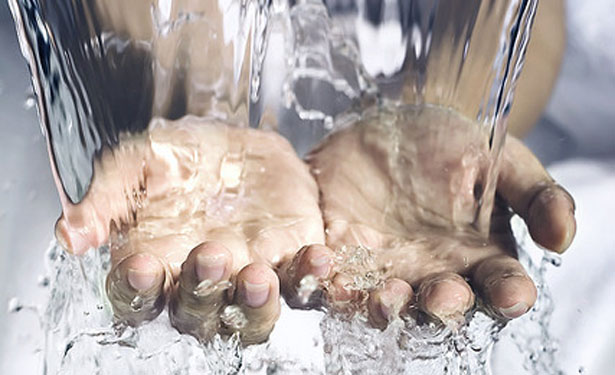
SCA Svenska Cellulosa Aktiebolaget/Flickr
It'due south common knowledge that washing your hands oftentimes and well is the all-time way to preclude disease transmission. Many of us are accustomed to using soap during handwashing every bit a matter of form -- information technology'south there in public bathrooms, it's in our homes, it'south in the office kitchen. Then in that location are those miscreants among the states who seem satisfied simply to rinse with running water earlier going back to their business. Who are these germ-mongerers, that they call back they tin can ignore the very conspicuously labeled (and fragrant!) sudsy agents the rest of u.s.a. use with such diligence?
Before we get as well carried away in our indignation, it's worth pointing out that soap is neither the holy elixir we sometimes think it is, nor do the vast bulk of people really use it every bit fastidiously as they should. Below, what science has to tell the states nigh the real value of soap.
How effective is soap over plain old water? It works, but all else beingness equal, water has a greater marginal effect. Health professionals recommend handwashing before eating, after using the bathroom, changing a diaper, and other situations in which y'all might come into contact with harmful leaner. Germs cling to our easily a lot more than easily than we give them credit for, and almost no corporeality of soap will remove them if other aspects of your handwashing technique aren't up to snuff. On the vivid side, combining adept technique with water alone can actually remove a significant share of germs from your hands.
This has been proven in countries where access to lather is express. In rural Bangladesh, where diarrhea among children is a widespread trouble, scientists examined the effectiveness of four dissimilar forms of hygiene on incidences of diarrhea. Some study participants were observed preparing their family's meals without washing their hands after using the bathroom. Others were observed washing 1 hand using water simply; notwithstanding others were seen washing both hands with h2o; and lastly, scientists saw some food preparers wash at to the lowest degree one hand with water and soap. While taking detailed notes on the manner and opportunities for handwashing, researchers too conducted monthly diarrhea tests on the children in each household in the report.
Hither'south what they found:
In households where nutrient was prepared without washing hands, children had diarrhea in 12.five% of monthly assessments compared with eight.3% in households where ane hand was washed with h2o only, 6.nine% where both hands were washed with water but, and three.7% where at least one hand was washed with lather. Food preparers usually done one or both hands with water only, but fieldworkers observed food preparers washing at least one hand with soap in just three households (one%).
Through the utilize of h2o alone on both hands, the rate of diarrhea was cut past virtually half. Peachy for a petty Water. Calculation in soap had a predictable effect, cutting the prevalence of diarrhea once more past another iii.2 points, just the gains from soap conspicuously weren't as high every bit from scrubbing with water. So, while avoiding soap if it's available is still a missed opportunity to remove germs, rinsing isn't and so pointless, either. Maybe we should withhold our judgment.
Is soap always make clean? This may exist disappointing to diehard germaphobes, but it'southward possible for soap to be crawling with leaner as much as anything else. If you're storing your soap improperly, such as leaving it in a wet pool on the edge of your sink, it gives bacteria a fertile identify to multiply. When yous use it, you basically wind upwards transferring germs from the soap direct to your easily.
In a thorough study of soap contamination, one team of U.Due south. researchers found that fifty-fifty amidst examination subjects with great handwashing technique -- more than on that in a minute -- soap that was already contaminated wound up increasing the number of bacteria on the subjects' hands after washing. The scientists tested 3 types of soap dispenser, in both lab and real-world settings. Of the three variants, the dispensers that were refillable from a giant bottle of liquid soap were by far the filthiest, leading to a 26-fold increase in handwashers' leaner levels. Modular dispensers that relied on sealed refills stayed clean even after a year of use. In short, both the nature of the dispenser likewise as the cleanliness of the lather itself can have a major impact on how clean your hands are after washing.
How helpful is antibacterial soap, anyway? In a head-to-head exam of antibacterial and regular soap, antibacterial soap has an inherent advantage. Ane report has shown that a 15-2nd handwashing session with regular soap successfully reduced E. coli past 1.72 log10, compared to two.90 log10 for antibacterial lather. But afterward doubling the time spent washing, the amount of bacteria removed skyrocketed (for antibacterial soap, the figure was 3.33 log10). Increasing the volume of soap used seemed to assistance in the case of antibacterial soap, just there seemed to exist a ceiling for regular soap across which more than time and more than soap did virtually nothing. Why?
The level of bacterial reduction caused by nonantimicrobial soap is due to its surfactants, which physically remove bacteria. One time maximum removal is achieved, soap amount and launder time do not better surfactancy. Antimicrobial lather provides both surfactancy and biocidal modes of action.
In other words, regular soap simply causes leaner to loosen their grip on your hands, to be rinsed away. That helps explain why using water alone still seems to work just fine, equally long every bit y'all rub your hands together vigorously. Past contrast, antibacterial lather has additives that are designed to kill bacteria outright.
What does information technology hateful to have "proficient handwashing technique"? Every bit you might have guessed already, washing your hands means more than slapping on a bit of soap, lathering upwards and so rinsing off. Anyone can "wash their hands" with soap and water and still come away with even more leaner than when they started. The real secret to cleanliness, it seems, is not but whether you use lather, but how hard you lot scrub, and for how long. The way your lather is stored and dispensed likewise matters, although in public environments, that's much less under your control. While health officials recommend washing for anywhere from 20 to 30 seconds, they should consider themselves lucky if people's entire bathroom trips last that long. Realistically, you might shoot for around 15 seconds of washing -- which, as information technology happens, isn't much longer than the current boilerplate (with soap, it hovers around 13 seconds; without information technology, information technology'southward about 11).

Source: https://www.theatlantic.com/health/archive/2012/06/soap-how-much-cleaner-does-it-actually-make-your-hands/258839/
Posted by: fraizertrepas98.blogspot.com
0 Response to "How To Clean Your Hands Without Soap"
Post a Comment